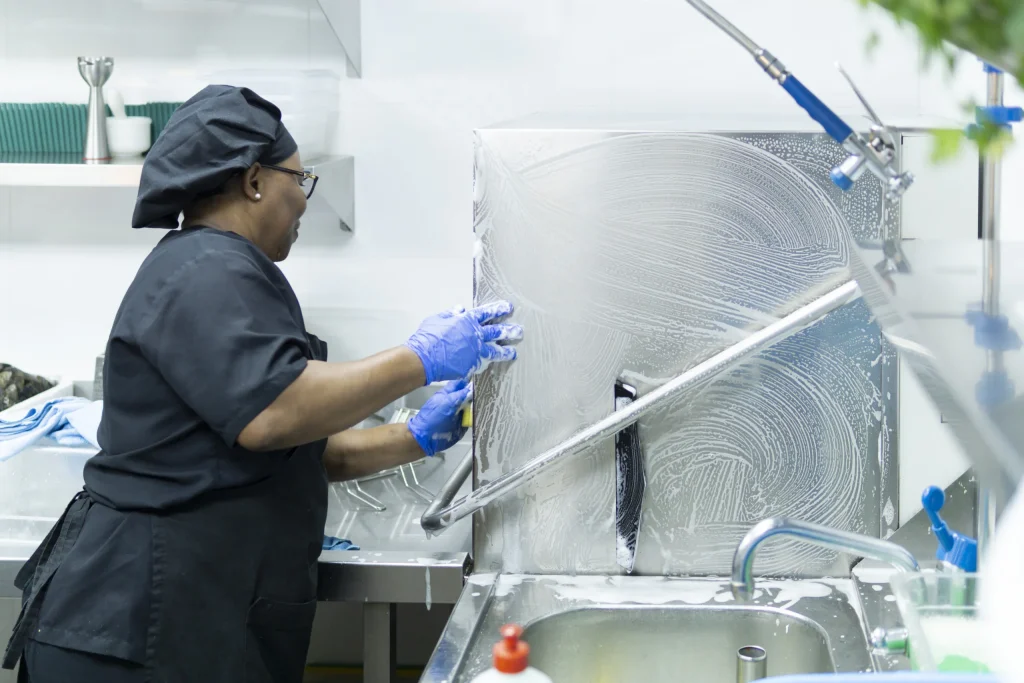
Commercial kitchens face a lot of challenges over the course of a day, preparing large batches of food for customers and making sure food hygiene levels are always being carefully tended to.
Staying on top of health and safety standards in commercial kitchens is a vital part of success. Our professional cleaners are dedicated to helping you to maintain the quality of your commercial kitchen to create healthy cooking conditions and make sure customers stay satisfied.
Read on for our deep dive into the importance of hygiene standards in commercial kitchens and how you can implement hygienic cleaning practices in your own kitchen.
Food Safety Standards in Commercial Kitchens
Food hygiene is probably the most important part of making sure any commercial kitchen stays functioning effectively.
Improper food safety and hygiene can lead to a number of issues, including:
- Food poisoning
- Pest infestations
- Hazardous waste
- Cross-contamination
- Allergy triggers
Any combination of these problems can halt the effectiveness of a commercial kitchen, hampering both the quality of food and the guests’ experience at your establishment.
Safe Food Storage
One of the easiest ways you can start to manage your food hygiene is by storing food properly in fridges, freezers and pantries.
Food storage is a great way to keep your food fresh and help you to avoid accidental cross-contamination. This will involve keeping food groups separate from each other and in clearly labelled containers that are air-tight to prevent germs and bacteria from entering.
In fridges, you should always make sure to store raw meats and fish on the bottom shelf. There’s always a risk with these products that they can leak onto other foods and spoil them.
It’s also important to be aware of the temperature you’re storing food at. In a fridge, the temperature should be below 5°C and a freezer should always be below -15°C. Regulating these temperatures carefully will help to stop food from spoiling and germs from gathering which will in turn prevent illnesses such as Salmonella from occurring.
Food that doesn’t go in the fridge or the freezer should be stored in a cool dark place to avoid being spoiled by warmth from the sun and discourage bacterial growth.
Protection Against Food Allergies
Safe food storage conditions will also help to add another layer of protection against potential food-related allergies.
Guests will often have a specific allergy that will need to be addressed to so making sure that allergy-causing ingredients are kept separated from other foodstuffs is essential to avoid cross-contamination.
It’s also a good idea to make sure that these ingredients are prepared separately on different chopping boards with different knives as an extra precaution. For example, if a guest has a nut allergy and is eating a modified dish, you should prepare and chop nuts on a separate board to minimise the risk of their allergy being triggered.
Make sure your staff all have the proper training and awareness of the different allergy groups so they can prepare food safely and react promptly in the event of an allergy attack. The different food allergies and their respective ingredients include:
- Gluten – bread, cereal, pasta, cakes and other baked goods (any foods containing wheat, barley or oats)
- Dairy – milk, butter, yoghurt, cheese, cream
- Seafood – fish, crustaceans (lobster, crab, prawns), molluscs (mussels and oysters)
- Nuts – peanuts and tree nuts ( such as almond, cashew, walnut, hazelnut, pecans and pistachios)
- Celery
- Lupin
- Sesame
- Soybeans
- Eggs
Allergic reactions can cause a number of symptoms to keep an eye out for, including rashes, swelling, hives and dizziness. Make sure your employees always know what to spot and take the necessary precautions during food preparation to maintain food hygiene levels.
Safe Food Preparation
Safe food preparation is vital to making sure your commercial kitchen remains healthy and the food groups detailed above are being handled properly.
Proper glove use is one of the most important steps. Wearing gloves for food preparation will help to protect the ingredients from outside bacteria but it’s important to make sure that gloves are changed for the preparation of different ingredients to avoid cross-contamination.
Make sure before preparation to wash any fruits and vegetables you’re cooking with. Rinsing them with cold water will help to get rid of excess dirt and bacteria so that when the ingredients are peeled and chopped, dirt from the outside won’t get on the inside of the fruit or vegetable that will be eaten.
Organisation is key in food preparation. Colour coding your chopping boards is a common practice in commercial kitchens to ensure there’s no confusion over where ingredients are prepared, ensuring a safe and rewarding experience for all your customers when their food is ready.
The chopping board colours for preparing food in a commercial kitchen are:
- Red – raw meat
- Blue – raw fish
- Purple – ‘free from’ foods
- Green – salad and fruit
- Brown – vegetables
- White – dairy
- Yellow – cooked meats
After food has been prepared and cooked thoroughly at the correct temperature, it’s important to understand the guidelines for reheating food.
After defrosting food to use for cooking, it should not be refrozen. Thawed food has bacteria that will grow at room temperature and when the food is refrozen, the bacteria can multiply when it’s defrosted again.
When it comes to reheating food, make sure it’s heated to a core temperature of 75°C to kill any bacteria that may have grown on the food.
Personal Hygiene in Commercial Kitchens
With a strong focus on food safety standards also comes a need for solid personal hygiene regulations to ensure that all of your employees are prepared and ready to handle the food preparation and cleaning of the commercial kitchen.
Personal Safety at Work
Before any cleaning or cooking work is carried out in the kitchen, it’s important to make sure your hands are washed thoroughly to remove any outside germs and make sure they’re dried on a clean towel.
You should also wear clean white work clothes. This helps you to avoid bringing outside germs into the kitchen as well as making it easy to spot stains so you can react accordingly and change into clean clothes to maintain the germ-free environment.
If you are ill, stay at home to recover. Coughing or sneezing in the workplace can cause germs to spread to the food, contaminating dishes that can then also make guests ill. Make sure to always take care of yourself and keep an eye on your personal health at work.
If you suffer from a cut or similar accident during work in the kitchen, make sure to have the wound dressed appropriately with a waterproof bandage to avoid any blood getting into the food and contaminating it while also preventing bacteria from entering the cut.
Safe Cleaning Procedures
It’s important to give your employees the proper training to help them maintain safe cleaning procedures in the kitchen so that you can stay working in safe and healthy conditions.
Disinfecting and sanitising surfaces before cooking food will remove any excess germs and after washing dishes, make sure the sink is clean of any excess food remnants especially if you have washed dishes, boards or knives that have been in contact with raw meats.
Some bacteria that are common around sinks include:
- Salmonella – found on foods such as chicken, turkey, beef, fruits
- Campylobacter jejuni – can be found on raw and undercooked poultry and seafood
- E. coli – can be found on raw and undercooked meats and unpasteurised milk
- Staphylococcus – can be found on poultry, cooked ham and corned beef
You should also make degrease and clean ovens, hobs and other equipment you use to process and cook food to get it prepared and ready for the next batch of cooking. It’s also important to clean walls and floors that food and sauces can spray or be dropped on during the process.
Set up a schedule with your employees to make sure that each area of your kitchen is kept consistently clean from germs. The more organised you are, the better your hygiene standards will be.
Hygienic Waste Management in Kitchens
A big part of keeping hygiene levels high and stable in commercial kitchens is safely handling and organising your food waste.
Make sure all food waste is stored safely away from the main cooking space and make sure it’s collected and disposed of regularly so that the waste doesn’t begin to rot or attract pests to your kitchen.
Pests can bring their own host of problems including:
- Droppings and pee
- Traces of fur
- Chewed electrical wiring
- Bacteria
Keeping your waste levels down can dissuade pests from settling in your kitchen and it’s important to keep an eye on the hotspots in your workplace as pests will be commonly attracted to places that offer shelter and a supply of food and water, which are naturally common in a kitchen environment.
Excrement, fur and bacteria can contaminate food and cause illness amongst your employees and customers while chewed electrical wiring can hamper the condition of appliances such as fridges, freezers and ovens. This could mean that food cannot then be stored or cooked safely at the right temperature which can lead to bacterial growth.
As commercial cleaners, we can help you to identify signs of pests and prevent them from settling while also carrying out maintenance on your electrical appliances to ensure wiring is intact and everything’s working properly.
Personal hygiene and food safety can help to guarantee a safer and happier work environment in your commercial kitchen, whether you’re servicing a restaurant, hotel, university or any number of other industries and businesses.
Good hygiene will improve the quality of the food you put out and heighten the satisfaction of your customers. For more information, you can read our guide on the best ways to protect against germs in your kitchen and check out our tips on keeping your restaurant clean to make a good first impression.